
The Evolution of Facility Management
The days of simply managing utility bills and scheduling routine maintenance are long gone for today's facility managers. As energy costs continue to rise and environmental regulations tighten, facility managers find themselves at the forefront of a major shift in how commercial properties interact with energy systems.
This transition isn't just about compliance or cost-cutting—it's about reimagining how facilities generate, consume, and manage energy in a rapidly changing world. For forward-thinking facility managers, three technologies stand out as game-changers: geothermal energy systems, solar power installations, and electric vehicle (EV) charging infrastructure.
At Kite Energy, we're seeing firsthand how these solutions are transforming commercial properties from passive energy consumers into dynamic, efficient, and sustainable operations.
The Growing Pressure on Facility Managers
Today's facility managers face unprecedented challenges:
Volatile energy costs that can wreak havoc on operating budgets
- Corporate sustainability mandates requiring significant carbon reduction
- Tenants and customers demanding greener facilities
- Regulatory requirements at local, state, and federal levels
- The need to maintain or improve comfort while reducing consumption
These challenges can't be adequately addressed with traditional approaches to energy management. Incremental efficiency improvements, while valuable, simply won't deliver the transformative results that modern facilities require.
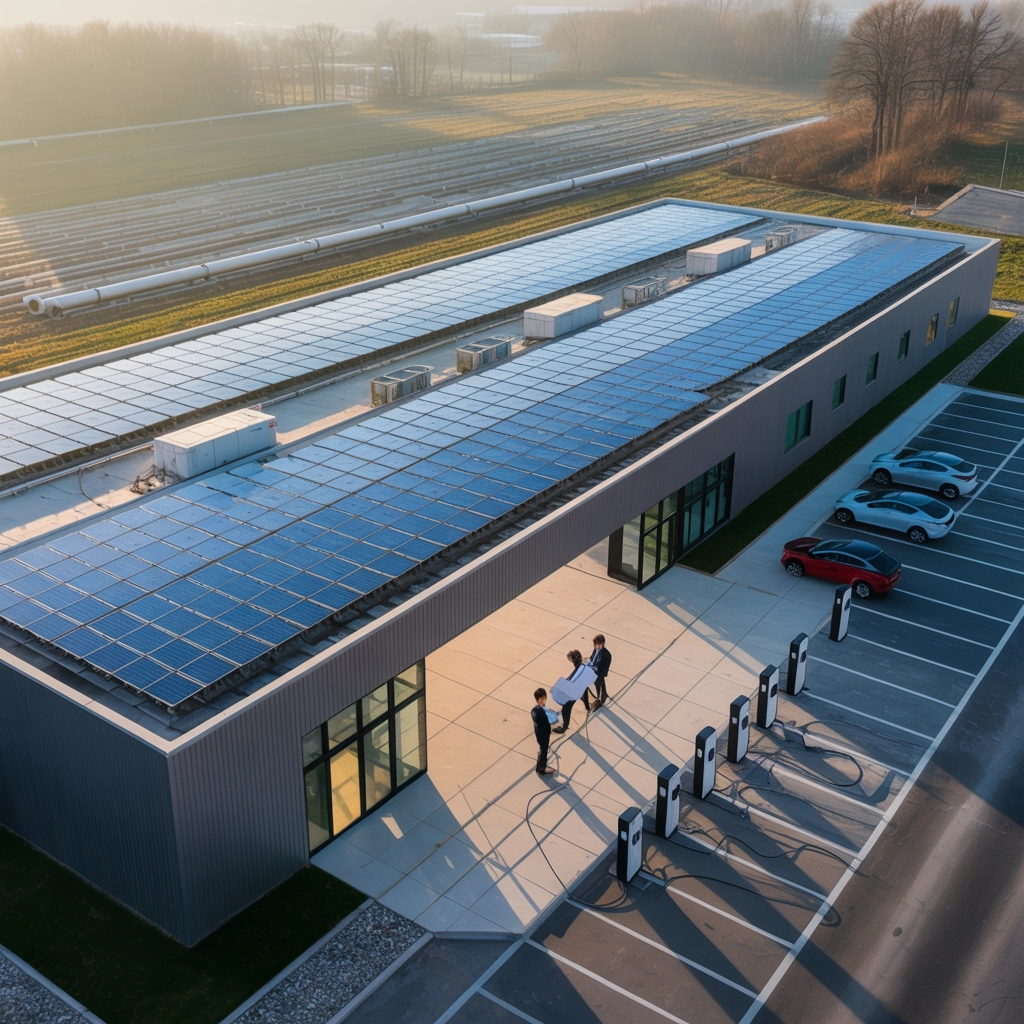
Geothermal Energy: The Hidden Powerhouse
When most people think of renewable energy, solar panels and wind turbines come to mind. However, one of the most reliable and efficient renewable energy sources remains largely out of sight: geothermal energy.
How Geothermal Works for Commercial Buildings
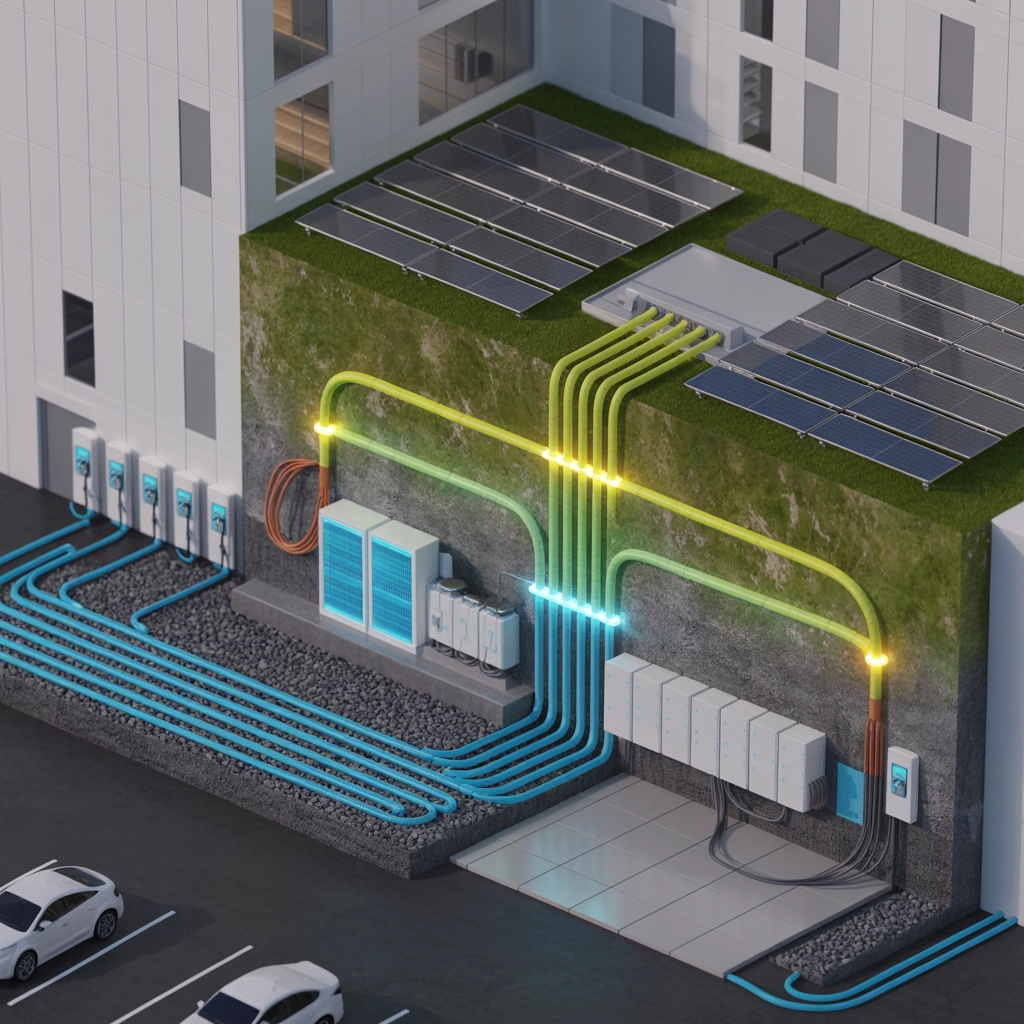
Geothermal systems leverage the stable temperature of the earth below the frost line (typically 50-60°F year-round) to provide highly efficient heating and cooling. By circulating fluid through underground loops, these systems transfer heat to buildings in winter and remove heat in summer.
For facility managers, geothermal heating and cooling offers several compelling advantages:
1. Dramatic Energy Savings
Geothermal heat pumps use 25-50% less electricity than conventional heating or cooling systems. With a coefficient of performance (COP) of 3.0-5.0, they deliver 3-5 units of heating or cooling for every unit of electricity consumed. This translates to energy savings of 30-70% compared to traditional HVAC systems.
2. Extended Equipment Life
While conventional HVAC systems typically last 15-20 years, geothermal systems can operate effectively for 25+ years for indoor components and 50+ years for ground loops. This significantly reduces replacement costs and maintenance requirements over a building's lifetime.
3. Silent Operation and Space Efficiency
Geothermal systems eliminate noisy outdoor condensing units and require less mechanical room space, freeing up valuable real estate for other purposes.
4. Consistent Comfort
By leveraging the earth's stable temperature, geothermal systems deliver more consistent comfort with fewer temperature fluctuations than conventional systems.
While the initial installation cost for geothermal systems exceeds traditional HVAC options, the payback period typically ranges from 5-10 years. When factoring in available tax incentives and utility rebates, this timeline can be even shorter.
Solar Energy: From Alternative to Mainstream
Solar energy has rapidly evolved from an alternative energy option to a mainstream solution for commercial facilities. Modern photovoltaic (PV) systems are more efficient, more affordable, and more versatile than ever before.
Strategic Benefits for Facility Managers
The advantages of integrating solar power extend far beyond simple energy generation:
1. Predictable Energy Costs
By generating electricity on-site, solar installations provide a hedge against utility rate increases. Facility managers can lock in energy costs for 25+ years—the typical lifespan of quality solar panels. This cost predictability is invaluable for long-term budgeting and planning.
2. Peak Demand Reduction
Commercial electricity rates often include demand charges based on a facility's highest period of electricity usage. Solar generation typically aligns with peak demand periods (daytime hours), helping to reduce these costly charges.
3. Net Metering and Revenue Generation
In many jurisdictions, excess energy produced by solar arrays can be sold back to the grid through net metering programs, creating a potential revenue stream for well-designed systems.
4. Multiple Installation Options
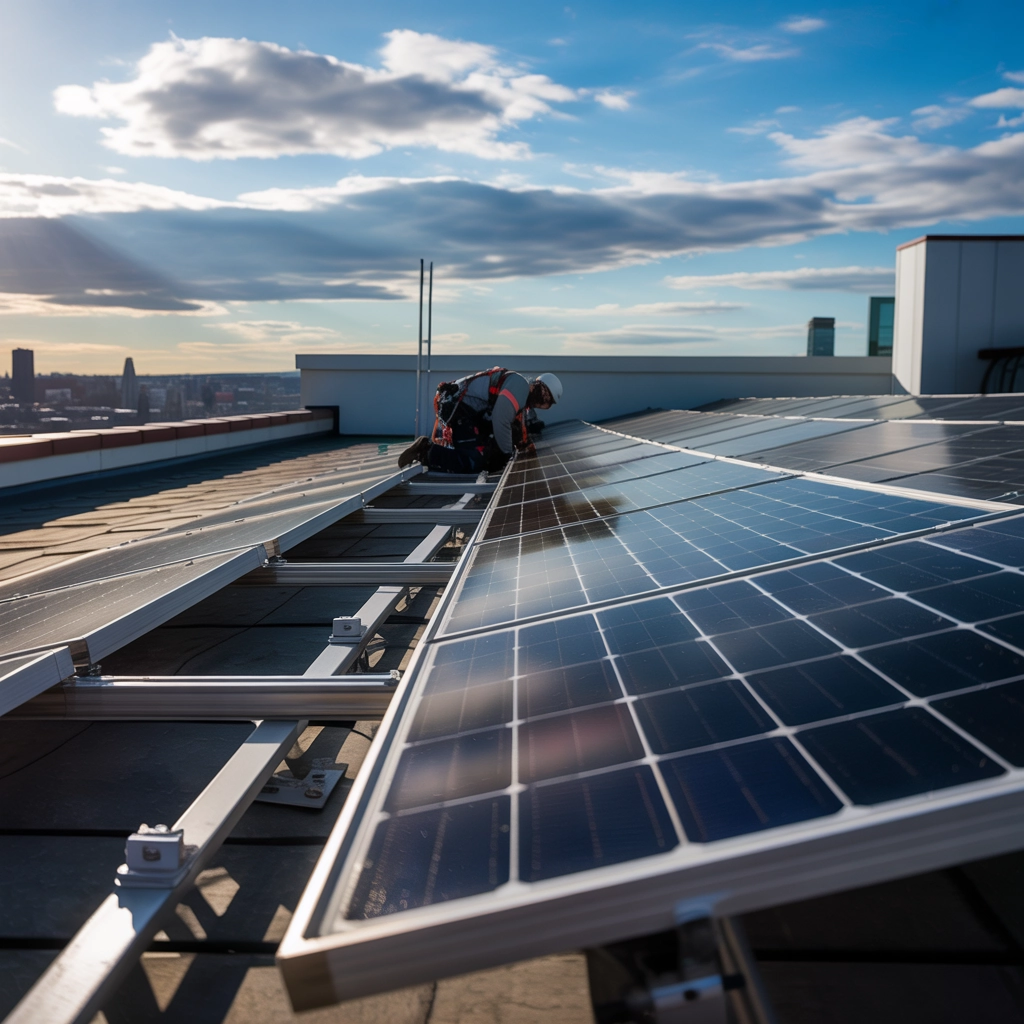
Today's solar solutions include roof-mounted systems, ground arrays, solar carports, and even building-integrated photovoltaics. This flexibility allows facility managers to customize installations to their specific space constraints and aesthetic requirements.
EV Charging: The Next Competitive Advantage
The electric vehicle revolution is well underway. Global EV sales continue to break records year after year, and major automakers have committed billions to electrifying their fleets. For facility managers, this transition represents both a challenge and an opportunity.
Why EV Charging Infrastructure Matters Now
1. Attracting Premium Tenants and Customers
Commercial properties with EV charging stations increasingly have a competitive edge in attracting and retaining high-value tenants and customers. For retail locations, charging stations can increase dwell time and drive additional foot traffic.
2. Supporting Corporate Sustainability Goals
Many organizations have established fleet electrification goals as part of their sustainability initiatives. Properties without adequate charging infrastructure will increasingly find themselves at a disadvantage when these organizations make leasing decisions.
3. Future-Proofing Your Facility
Installing EV infrastructure now—or at minimum, making properties "EV ready" with appropriate electrical capacity and conduit—prevents costly retrofits later when demand becomes even greater.
4. Potential Revenue Generation
Depending on your facility type and location, EV charging can become a direct revenue source through user fees or an indirect one through increased property value and tenant satisfaction.
The key considerations for facility managers include:
- Level of service: Determining whether Level 2 chargers (4-6 hours for full charge) or DC fast chargers (20-30 minutes) are appropriate for your facility's use case
- Load management: Ensuring your electrical infrastructure can support charging demands
- Software integration: Selecting charging systems that integrate with your building management systems
- Scalability: Planning for future expansion as EV adoption accelerates
Integration: The Whole is Greater Than the Sum of Parts
While each of these technologies delivers significant benefits individually, their true potential emerges when integrated into a comprehensive energy strategy.
Consider a commercial property that combines:
- Geothermal systems for base heating and cooling needs
- Solar arrays generating electricity during peak demand periods
- Battery storage systems capturing excess solar production
- EV charging infrastructure powered by on-site generation
- Intelligent building controls optimizing the entire ecosystem
This integrated approach delivers multiple benefits:
- Resilience: Reduced vulnerability to grid outages and energy price volatility
- Optimization: Smart systems that leverage each technology at its most efficient point
- Maximum ROI: Combined incentives and stacked benefits that improve overall returns
- Future readiness: Adaptable infrastructure that can incorporate emerging technologies
Getting Started: Practical Steps for Facility Managers
Transforming your energy infrastructure may seem daunting, but a methodical approach can make the process manageable:
1. Conduct a Comprehensive Energy Audit
Before investing in new technologies, understand your current energy profile. Identify consumption patterns, inefficiencies, and opportunities for improvement. This baseline is essential for measuring ROI and prioritizing investments.
2. Assess Your Facility's Potential
Evaluate your property's suitability for each technology:
- For geothermal: Determine available land area for ground loops or assess bore hole potential
- For solar: Analyze roof condition, orientation, shading, and structural capacity
- For EV charging: Evaluate electrical capacity, parking configurations, and user needs
3. Explore Financing Options
Multiple approaches can make these investments more accessible:
- Performance contracts where savings pay for improvements
- Power purchase agreements (PPAs) with little or no upfront cost
- Equipment leasing arrangements
- Utility incentives and rebate programs
- Federal and state tax incentives
4. Develop a Phased Implementation Plan
Few organizations can implement all technologies simultaneously. Prioritize based on:
- Expected return on investment
- Alignment with organizational goals
- Timing of other planned renovations or equipment replacements
- Available incentives with approaching deadlines
The Bottom Line for Forward-Thinking Facility Managers
The transition to renewable, distributed energy solutions isn't just environmentally responsible—it's a strategic business decision with significant financial implications. Facilities that lead this transition will benefit from:
- Lower and more predictable operating costs
- Enhanced property values
- Improved tenant attraction and retention
- Reduced regulatory compliance risks
- Greater operational resilience
The question for facility managers is no longer whether to implement these technologies, but when and how to do so most effectively.
Partner with Experts for Maximum Impact
At Kite Energy, we specialize in helping facility managers navigate the complex landscape of renewable energy and electrification technologies. Our integrated approach ensures that your investments deliver maximum value through systems that work together seamlessly.
From initial assessment through design, financing, implementation, and ongoing optimization, our team provides the expertise you need to move confidently beyond the grid toward a more sustainable and profitable future.
Ready to explore how geothermal, solar, and EV charging can transform your facility? Contact our team for a no-obligation consultation today.select a text box a settings menu will appear. your website by double clicking on a text box on your website. Alternatively, when you select a text box.